
MCP Slim GuardReversible MCP context compression
Cut MCP context before it reaches the agent.
Same upstream call. Exact recovery.
View on GitHub76% fewer MCP tokens in our standard benchmark
01 / STANDARD BENCHMARK
One call. Exact recovery.
The frozen standard benchmark covers 12 deterministic tools and 24 bilingual tasks, using o200k_base to count the MCP delivery path.
A separate synthetic stress test with 100 tools and an 8,000-row result reached an upper bound of 99.7%.
02 / DELIVERY CONTRACT
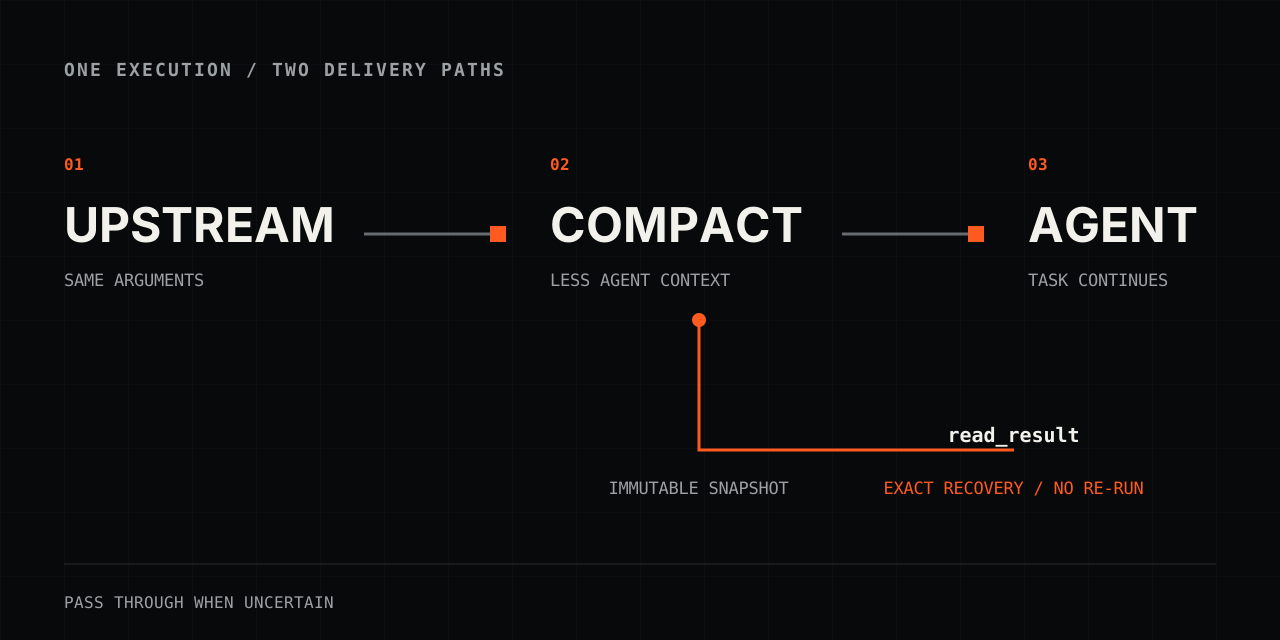
Upstream → Compact → Recover
Slim Guard forwards the selected arguments unchanged and runs the authorized upstream tool once per request. Eligible oversized results enter the agent context as a compact view.
Slim Guard stores one immutable snapshot alongside that view. When the agent needs the source, read_result reads the snapshot and the upstream call count stays at one.
03 / FAQ
Five common questions.
01What is MCP Slim Guard?
MCP Slim Guard is a reversible MCP result-delivery runtime. The current Alpha reduces Generic tool catalogs and eligible oversized result context on both Generic and Native surfaces.
02Which MCP content does it reduce?
It reduces the authorized Generic tool catalog and compacts eligible long text, uniform JSON, and log-like results. Other results keep the upstream delivery format.
03Does recovery call the upstream tool again?
Slim Guard stores one immutable snapshot, and read_result reads it directly. The upstream call count stays at one before and after recovery.
04Which hosts does the current Alpha support?
Codex is supported with Native preferred and Generic fallback, while Claude Code is supported on the Generic surface. VS Code remains preview support, and OpenCode is planned after Alpha.
05Is it a general-purpose security gateway?
MCP Slim Guard focuses on reversible result delivery. Authorization, exact routing, and audit behavior serve that delivery path.
04 / SOURCE
Inspect the implementation. Reproduce the benchmark.
GitHub hosts the open-source Alpha v0.1.1-alpha.1, with installation, host boundaries, benchmark methodology, and source.